
Claim: “One group owns all airports.” | Truth: 6 players. Competitive bids. Transparent rules.
“One group owns all airports” spreads because it compresses complexity into a single emotional hook. Brand names repeat, headlines flatten nuance and people assume visibility equals control. Leases, regulators and bidding rules are invisible, so a plural system feels like consolidation. The story is simple, the structure is not.
India does not sell airports. It leases them under a public-private partnership model. The Airports Authority of India owns almost all civilian airports, operates around 100 and remains a lessor and supervisor even for PPP sites. Private firms operate specific airports under fixed concessions, tariff regulation, and performance contracts.
Once airports are seen as leased assets in a multi-operator system, the monopoly narrative collapses. Control is measured by traffic, not count. AAI still runs most airports, GMR dominates the busiest hub, others operate different metros and new rounds continue. What appears to be dominance is structured competition.
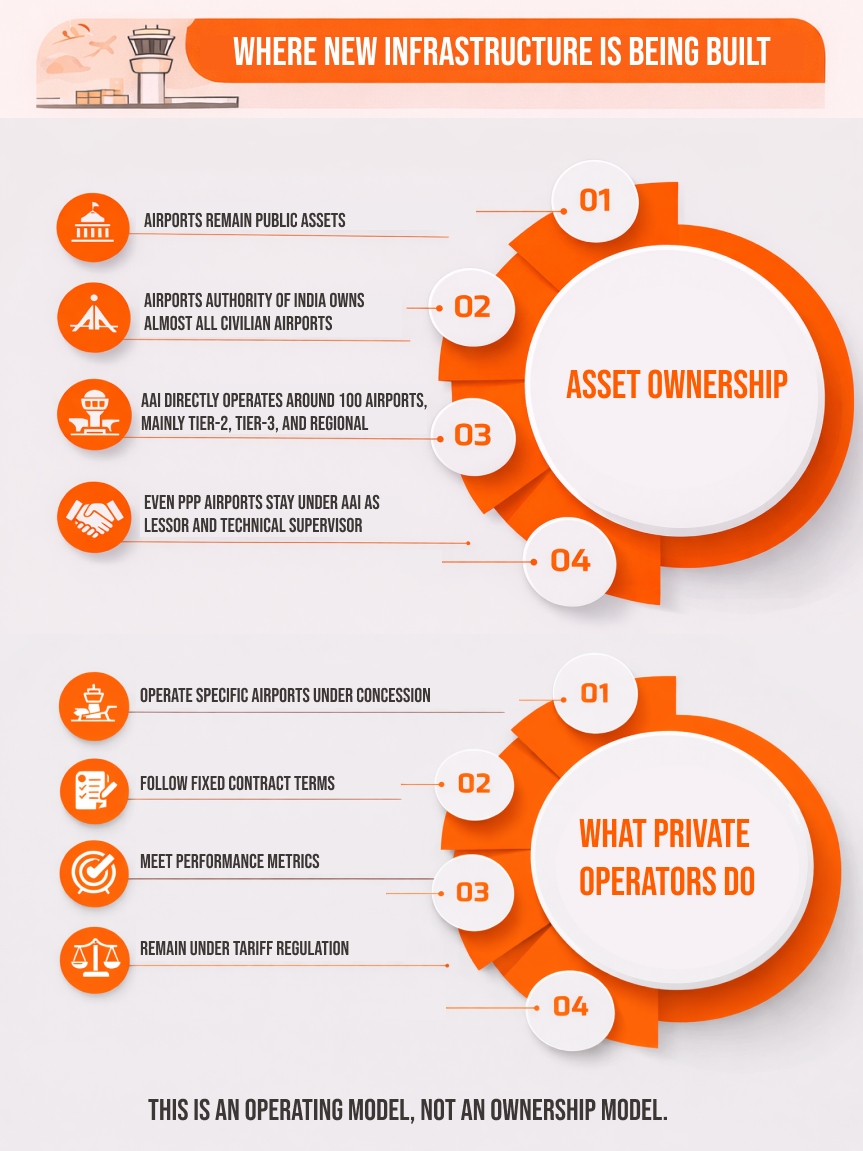
Ownership Structure
Airports remain public assets, with ownership, supervision and long-term control retained by the state even when private operators are involved.
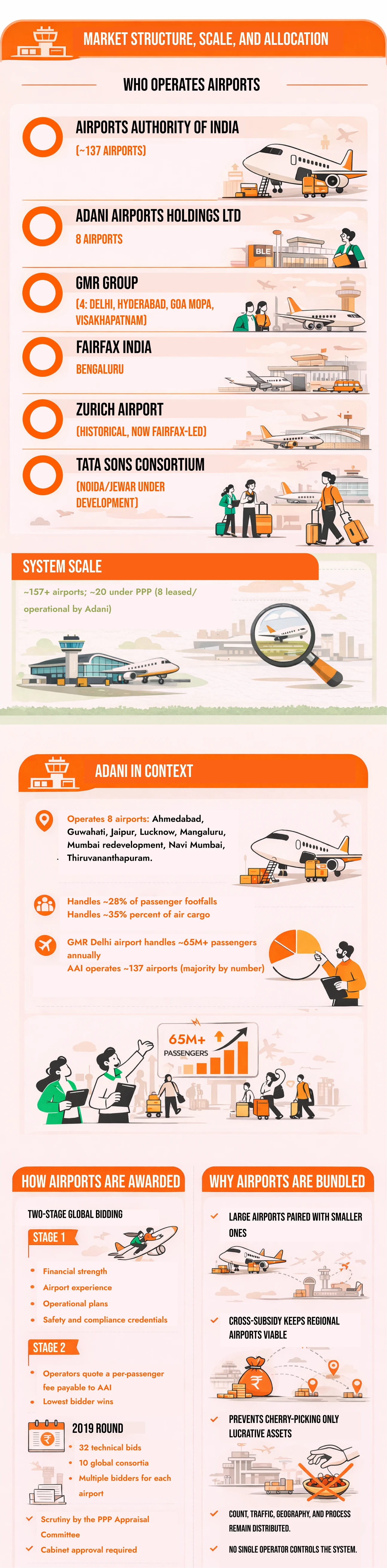
Competitive Dispersion
Operations, traffic, and future capacity are distributed across multiple public and private players through competitive bidding rather than concentrated ownership.