
Solar Panels Are Recyclable. India Now Regulates Their End-of-Life
The idea that solar panels are “destined for landfill” spreads easily because India’s solar buildout is fast and visible while end-of-life systems operate quietly. Social media rewards simple warnings, not regulatory detail. In that noise, homeowners and investors assume no rules, no technology and no plans exist.
In November 2022, India revised its E-Waste (Management) Rules to place solar PV modules under the Extended Producer Responsibility framework. Manufacturers must finance collection and recycling, buy EPR certificates, report data through 2035, and meet CPCB recovery targets for glass, aluminum, silicon, and precious metals.
Panels are designed for 25-year lifecycles, and now their exit is engineered too. With hundreds of certified recyclers, automated disassembly and thermal and chemical recovery, end-of-life becomes part of system design. Solar growth no longer creates a hidden waste problem, it creates a circular materials stream.
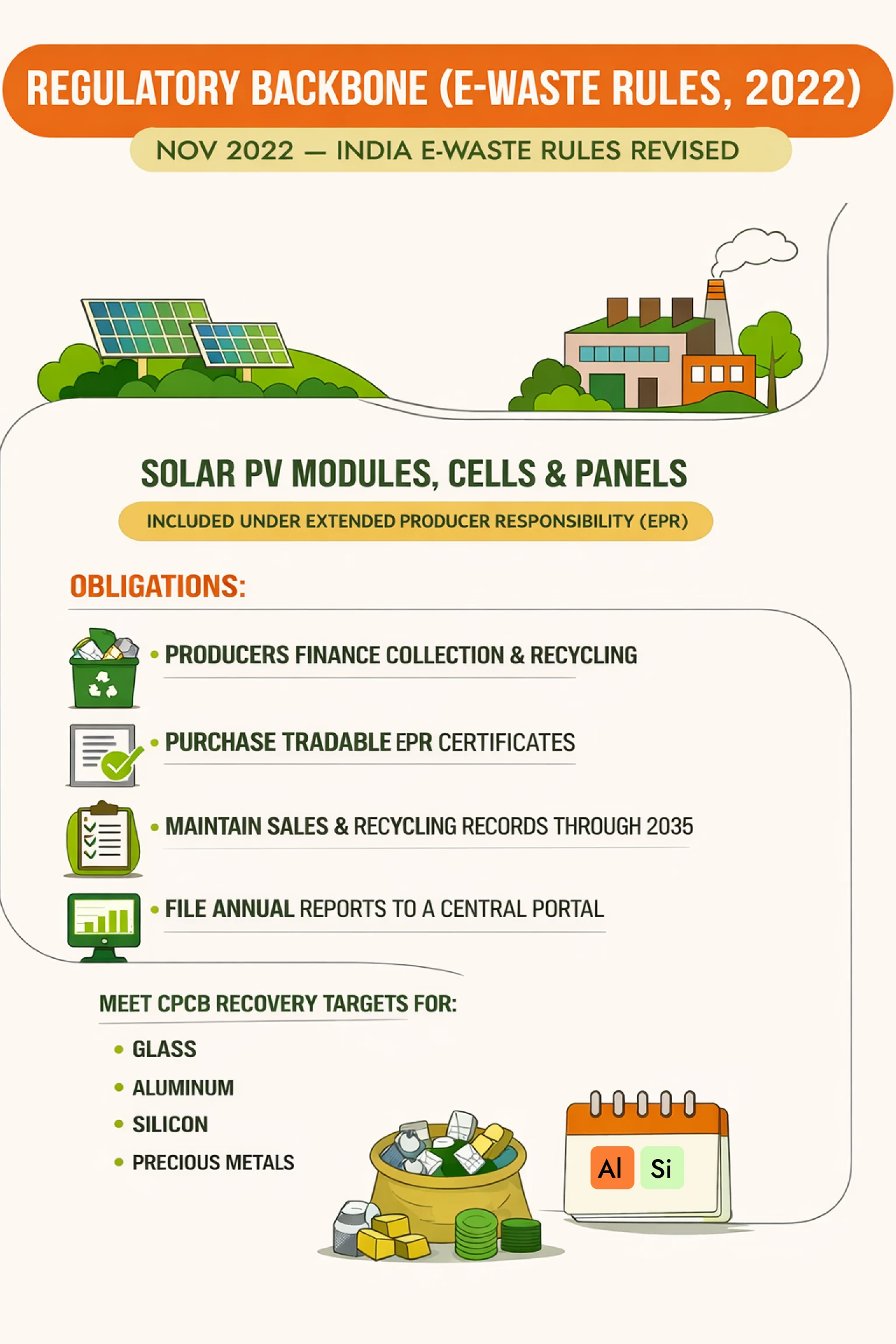
Legal Classification
Solar PV modules are formally placed under Extended Producer Responsibility, making recycling a statutory requirement rather than a voluntary practice.
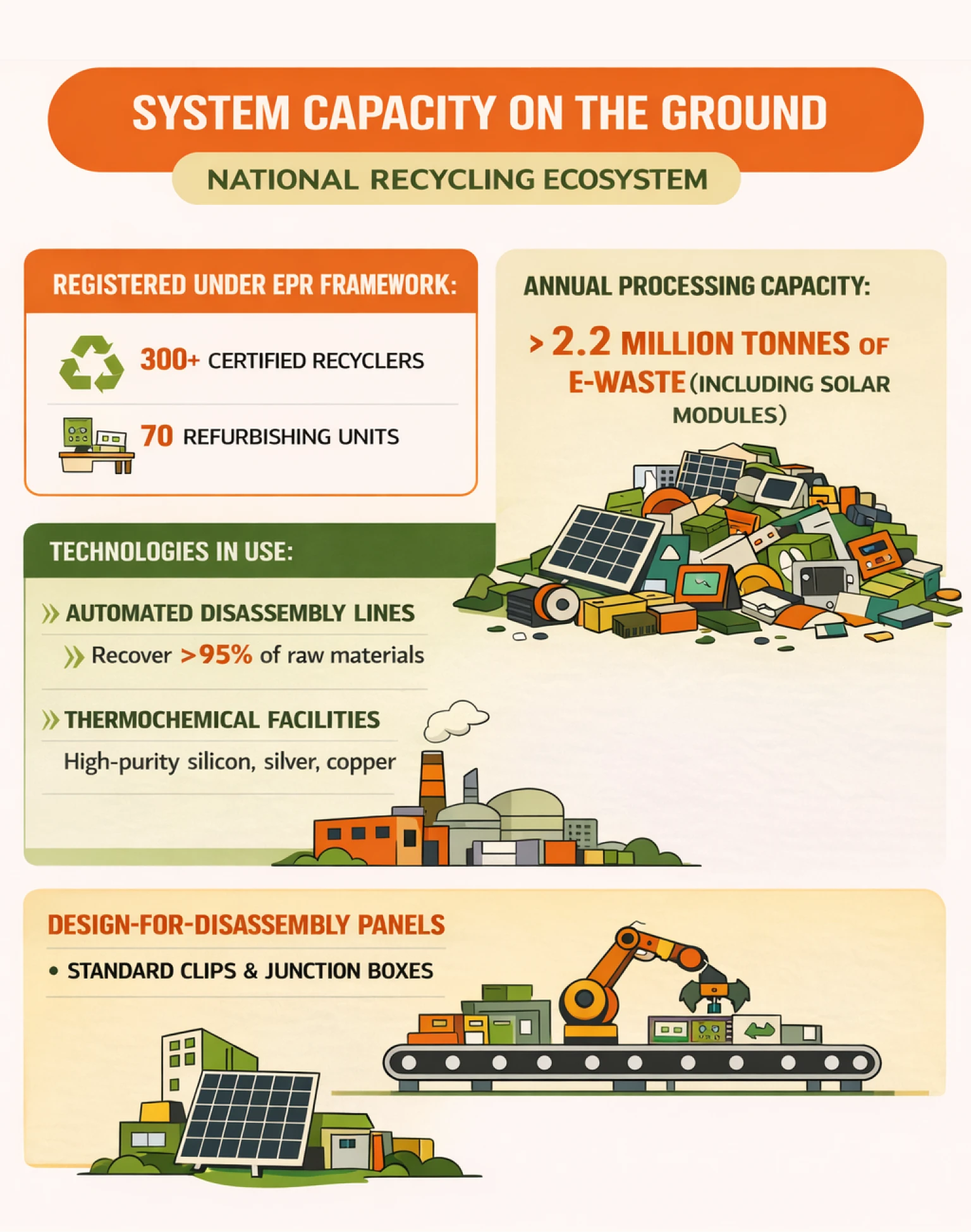
Existing Infrastructure
Certified recyclers, refurbishing units and industrial recovery systems already process solar waste at national scale.
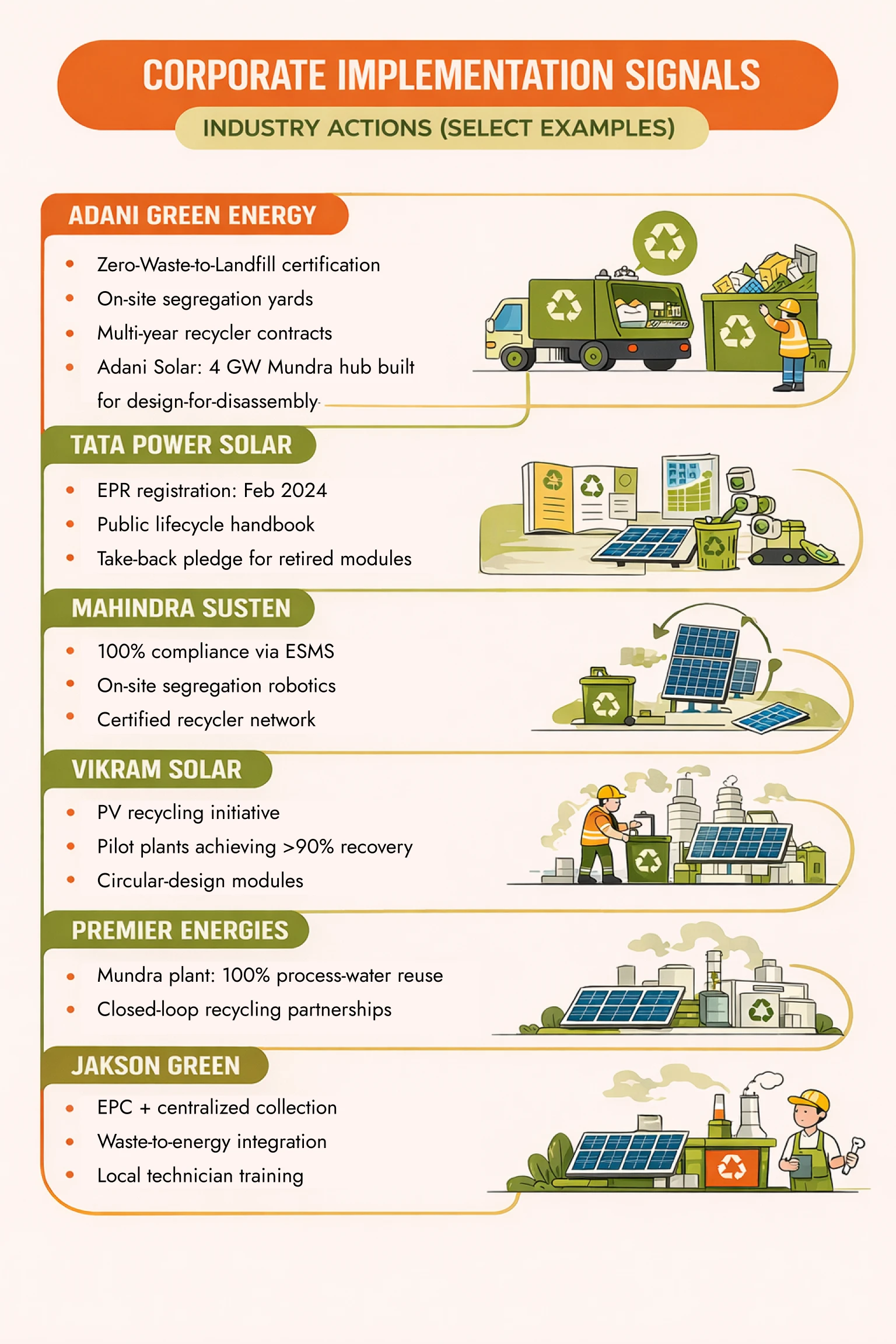
Industry Adoption
Major manufacturers and developers have integrated recycling, take-back, and design-for-disassembly into active operations.
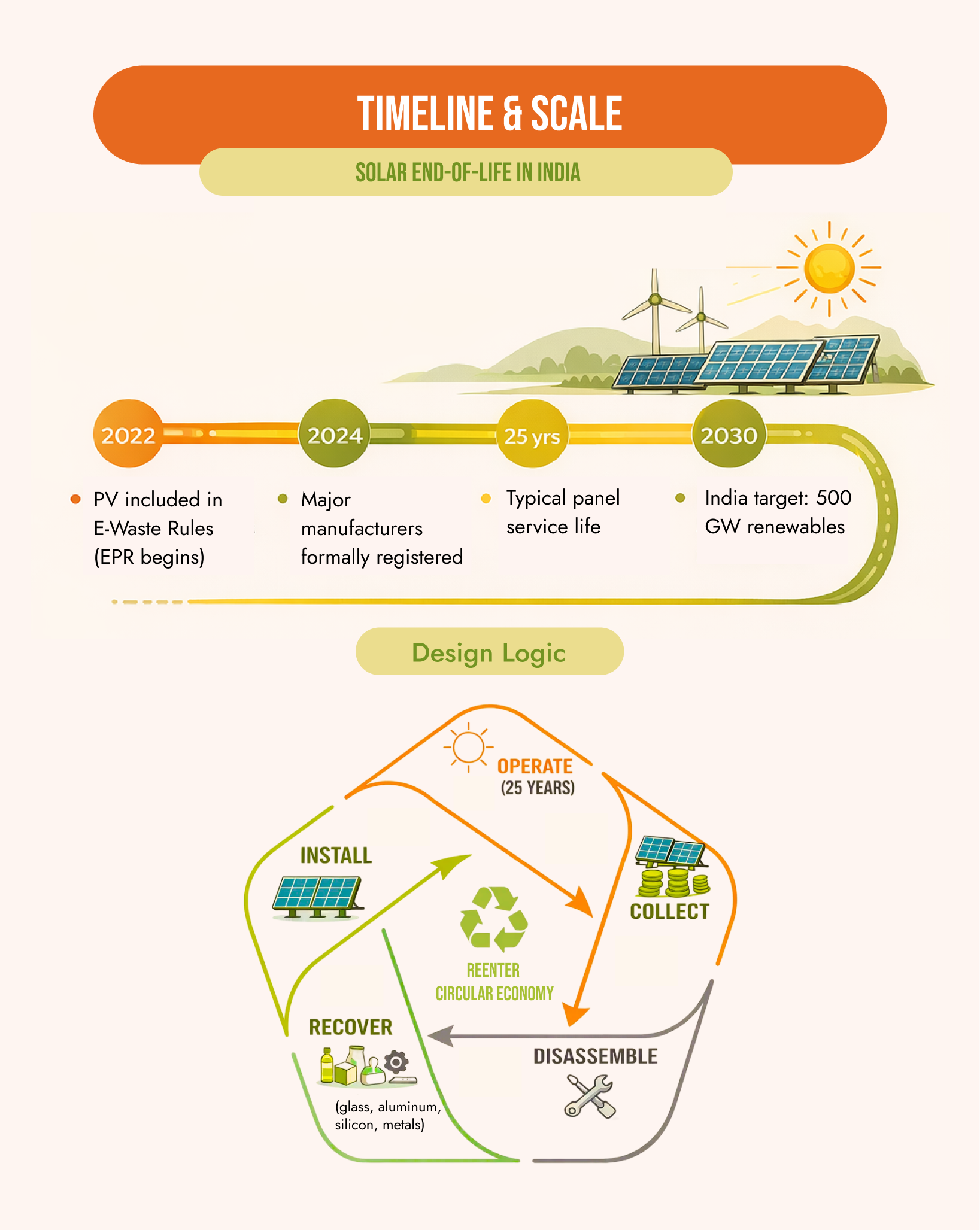
Lifecycle Closure
Solar panels are now governed from installation through end-of-life recovery, embedding circularity into system design.