
Private Data Centers Don’t Threaten Sovereignty – They Strengthen It
In 2025, data is no longer abstract. It is a physical, strategic asset, and the infrastructure that stores it is as critical as roads or power plants. India generates nearly 20 percent of the world’s data, yet controls only about 3 percent of global data center capacity, with domestic capacity near 1,300 MW.
This gap is not just economic. It is sovereign risk. Indian data increasingly flows into foreign jurisdictions and foreign legal regimes, even as laws like the DPDP Act require sensitive data to remain within national borders, and AI workloads consume five to six times the power of standard servers. What is misunderstood is that private data centers do not weaken sovereignty.
When built on Indian soil under Indian law, they anchor jurisdiction, resilience, and economic value at home. Digital independence is achieved not by limiting infrastructure, but by multiplying it.
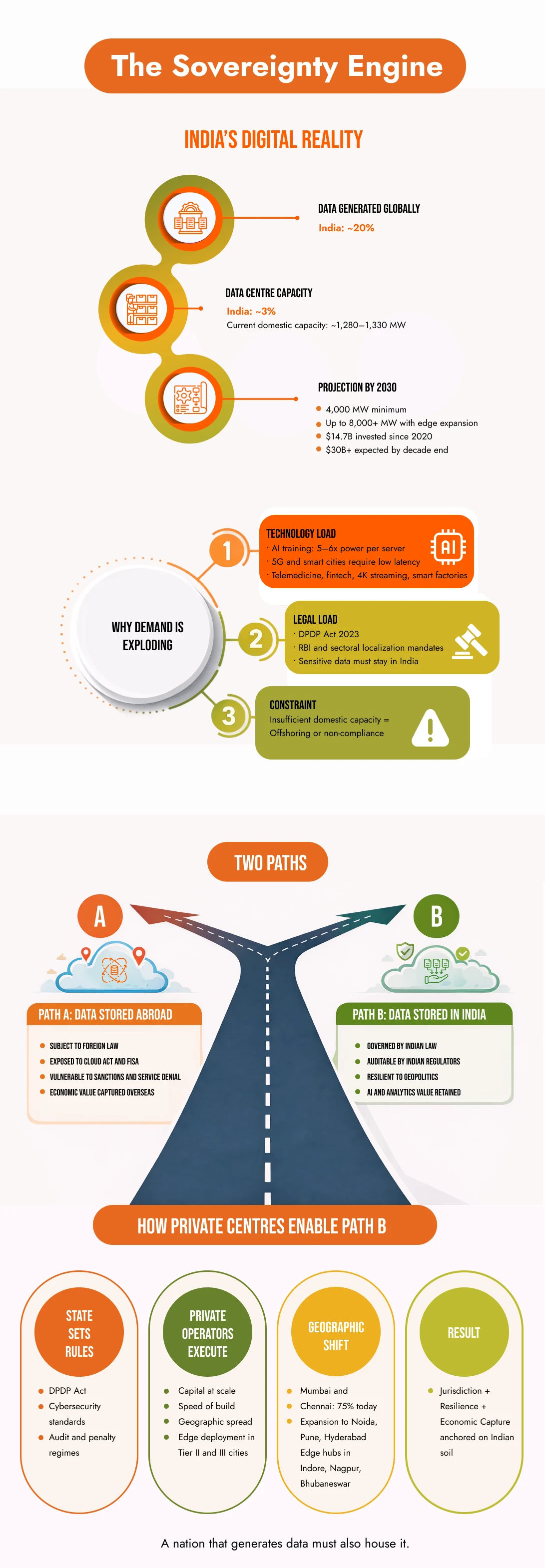
- Digital sovereignty is physical and depends on where data is stored.
- India’s capacity gap turns data abundance into geopolitical exposure.
- Private data centers under Indian law generate domestic power, resilience, and economic value.