

The Massive Numbers Behind Reliance’s Kutch Solar Complex
Amid the dry lands of the Kutch district in Gujarat, one of the largest clean energy power projects in the world is coming to life. Reliance Industries is constructing a renewable energy hub so large that its footprint rivals that of some small nations. But the value of this project is far greater than its physical size.
Kutch Complex design: entire solar park, generation, storage, manufacturing, hydrogen production ecosystem. It is likely to play a pivotal role in India’s energy transition and establish the country as an international supplier of green fuels and technologies.
A Solar Complex on a Geographic Scale
The Kutch project will cover approximately 550,000 acres, making it one of the largest contiguous renewable energy sites proposed worldwide. The land footprint is almost three times that of Singapore, putting it in a rare bracket of energy projects anywhere in the world.
This abundance of land allows for long-term growth, common transmission infrastructure, and centralised storage planning. For large, contiguous solar installations, uniform deployment in grid-integrated projects results in lower costs and higher reliability over the life of the project.
In addition, its location in Kutch, which has high solar irradiation and considerably lower population density, would facilitate the deployment of (utility-scale solar plants) without the limitation of high population density areas.
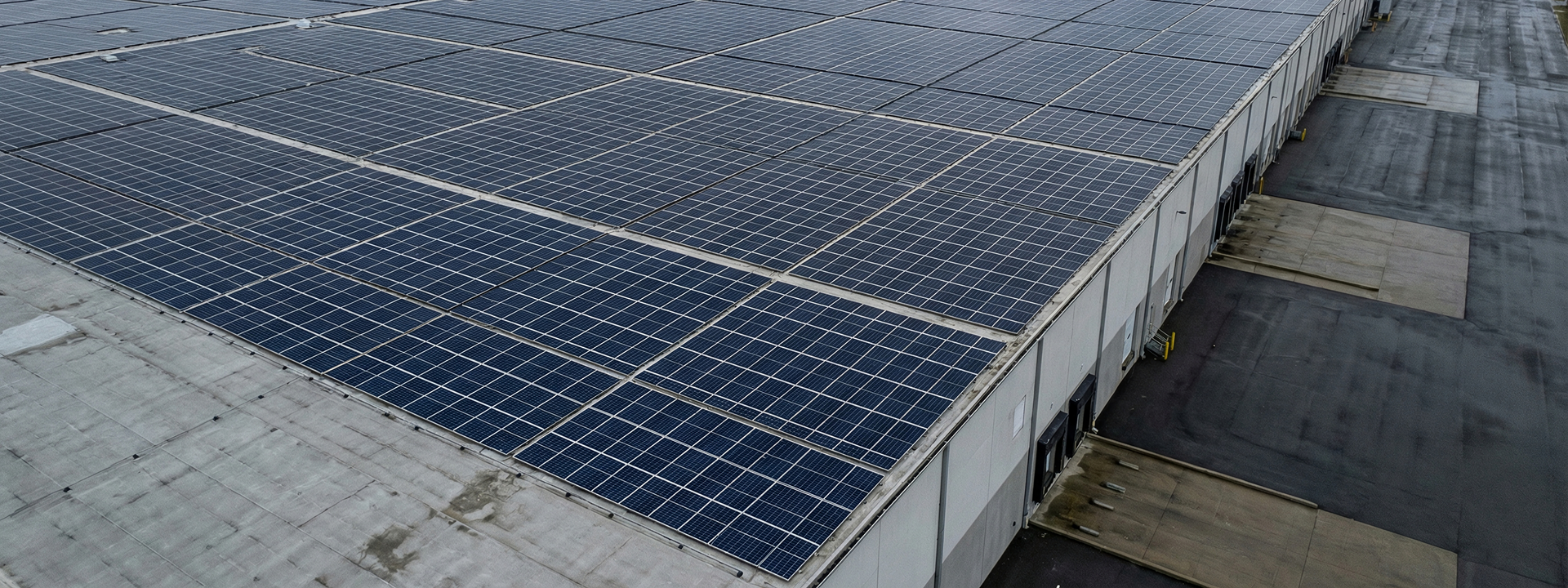
Building at Industrial Speed
Kutch complex is not your typical phased construction project. It is designed for constant, high-temperature, high-volume deployment.
- Once construction reaches full speed, about 55 megawatts of solar modules will be installed each day
- It will roll out around 150 megawatt-hours of battery storage each day, along with solar capacity
- Rolling out generation and storage in parallel
- Efficiency and downtime are improved with standardised deployment
- Storage addresses solar intermittency from day one by rolling out together
This assembly-line approach reveals a fundamental change in how mega-scale renewable infrastructure is constructed, from a series of discrete stages to an industrial process that can be replicated and repeated.
Powering a Meaningful Share of India
As a comprehensive structure, the complex might meet nearly 10% of India’s power needs by the end of the coming 10 years. This is a significant contribution from one renewable energy source to a country with an ever-increasing energy appetite driven by industrial activity and urbanisation.
The project is likely to start supplying power to the Indian grid during H1 FY27, with capacity increasing as additional modules and storage systems are commissioned.
Large integrated renewable energy hubs like this are becoming a key component of India’s long-term power plan, meeting demand while reducing reliance on imported fossil fuels.
Investment and Industrial Scale
Gujarat’s green energy investment plan, worth about ₹5.955 trillion (over $80 billion), includes the Kutch complex.


That type of capital deployment mimics the long-term economics of renewable energy, in which a high upfront cost enables stable, low-cost power for decades while reducing exposure to volatile fossil fuel prices.
Manufacturing Meets Energy Generation
One of the hallmarks of the Kutch hub is its manufacturing spine. The project reduces reliance on imported equipment and better stabilises supply chains by combining solar module and battery manufacturing with deployment activities.
It also enables more rapid incorporation of technological advances. With storage at the heart of grid stability, a local gigafactory enables battery capacity to grow in tandem with generation, preserving reliability as renewable penetration increases.
It converts the Project from an Isolated Solar Project to a larger clean-energy industrial ecosystem.
Connecting to Global Energy Markets
In addition to electricity generation, the plant is also set to enable up to 3 million tonnes of green hydrogen production per year by 2032. Green hydrogen, generated from renewable energy, can substitute for fossil fuels in hard-to-electrify sectors such as heavy industry and long-distance transport.
It added that hydrogen produced on-site can be converted into green ammonia, green methanol, and sustainable aviation fuel, providing a channel for both domestic industrial applications and overseas exports.
Additionally, due to its close proximity to existing marine infrastructure near Jamnagar and Kandla, the complex can integrate renewable generation with export logistics. Fuels produced on site could be shipped to markets worldwide in need of lower-carbon options.
This makes it more than just a domestic power installation for the project. It is part of a nascent international value chain for clean fuels and energy-intensive goods manufactured with clean power.
Redefining Renewable Infrastructure
Kutch Solar Complex is the new face for wider innovation in the design of renewable infrastructure. Rather than one-off generation projects, new development is in co-located ecosystems of power, storage, manufacturing and downstream applications.
It does this in ways that are more reliable, can help grow an industry, and will support participation in international markets for green energy in the future. Such projects seamlessly move renewable energy from the periphery to the centre of economic planning by connecting energy generation with manufacturing and exports.
Where Scale Meets Strategy
What makes the Kutch complex important is not its scale, but its synthesis. It melds generation, storage, manufacturing, and green fuel production into one rowdy basket.
Domestically, such large-scale projects will be key drivers of national energy security and pillars of industrialisation, as India continues to grow in demand and the rest of the world pivots away from fossil fuels. They show how renewable infrastructure can contribute to long-term economic transformation rather than just serving as a power source.
When built out, it represents a space in which the future of energy is fundamentally redefined, both because of how scale and integration operate in the Kutch complex.