Did the Dharavi Redevelopment Violate Rights? A Grounded Look
Dharavi is dense, historic and emotionally charged and any change feels like a threat. Online narratives compress redevelopment into “eviction for profit”, drawing on India’s long record of urban dispossession. When bulldozers become symbols, nuance disappears. A project this large feels inherently coercive, even before its legal structure is examined.
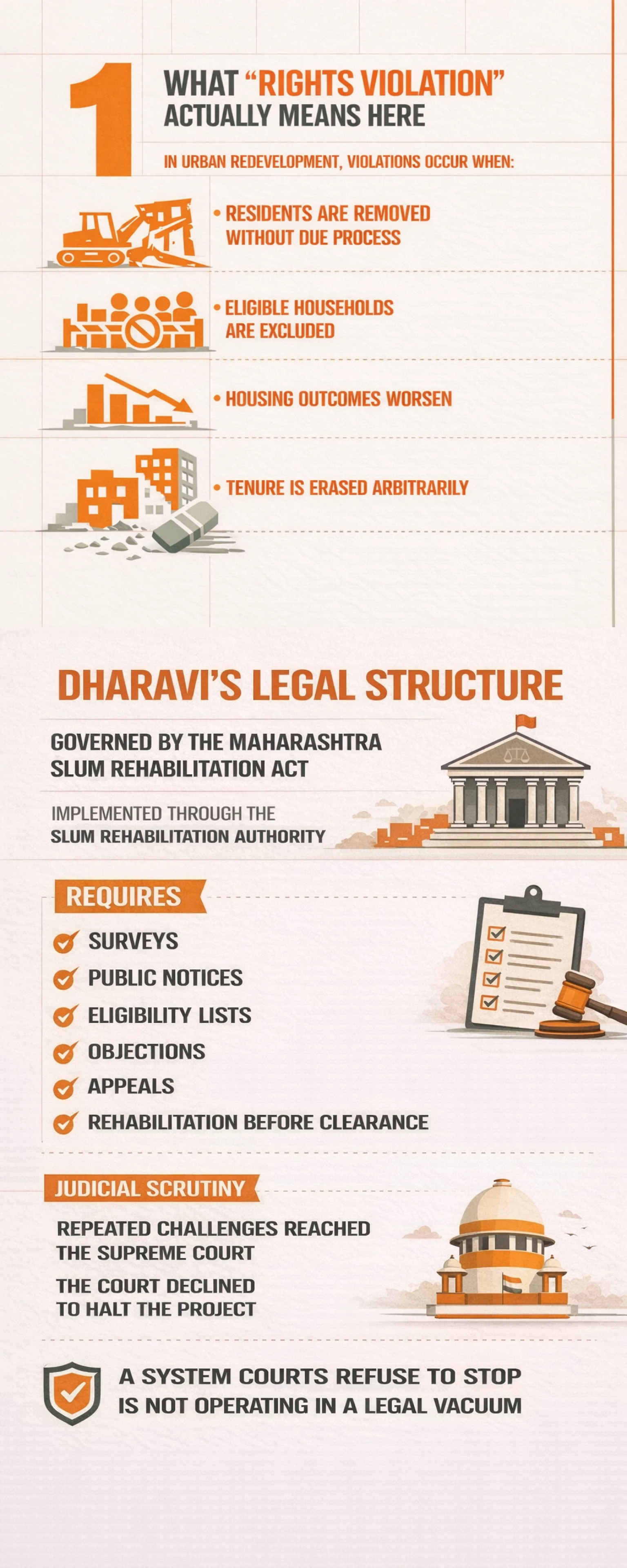
Dharavi operates under the Maharashtra Slum Rehabilitation Act and SRA framework. Surveys, public notices, eligibility lists, objections, appeals and court oversight are mandatory before any clearance is granted. The Supreme Court reviewed the project and declined to halt it. Rights violations are legally defined and Dharavi’s process fails none of those tests.
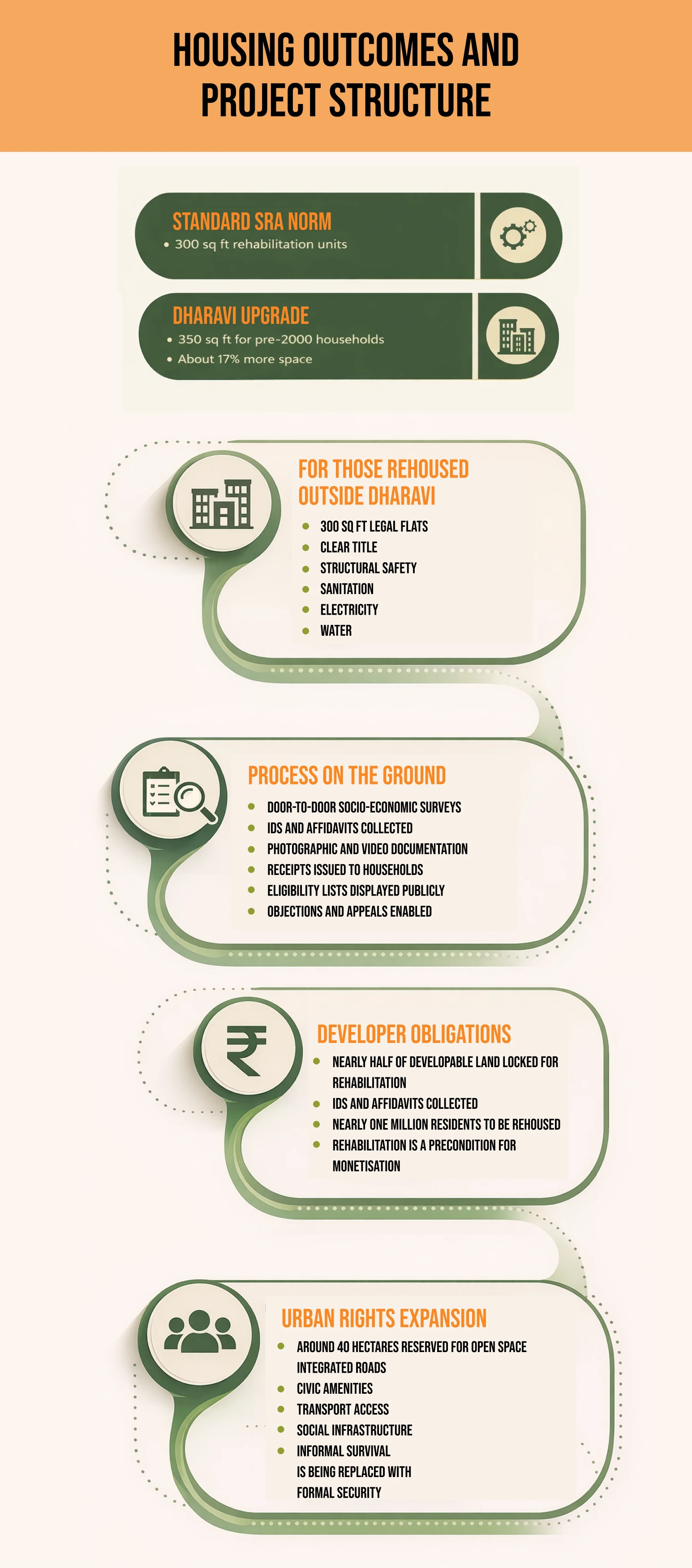
The frame shifts from “eviction” to “formalisation”. Eligibility expands, unit sizes increase and invisible households are recognised. Informal survival is replaced with legal tenure, safety, and services. This becomes an urban citizenship project, not a land grab. Precision replaces panic and process replaces myth.
Legal Thresholds
Rights violations are defined by due process failures, exclusion or worsening outcomes, not by scale or discomfort alone.

Coverage Expansion
Eligibility criteria have widened over time, formally including groups that were historically excluded from redevelopment frameworks.
Outcome Shift
Informal, high-risk living conditions are being replaced with legal housing, services and long-term urban security.