
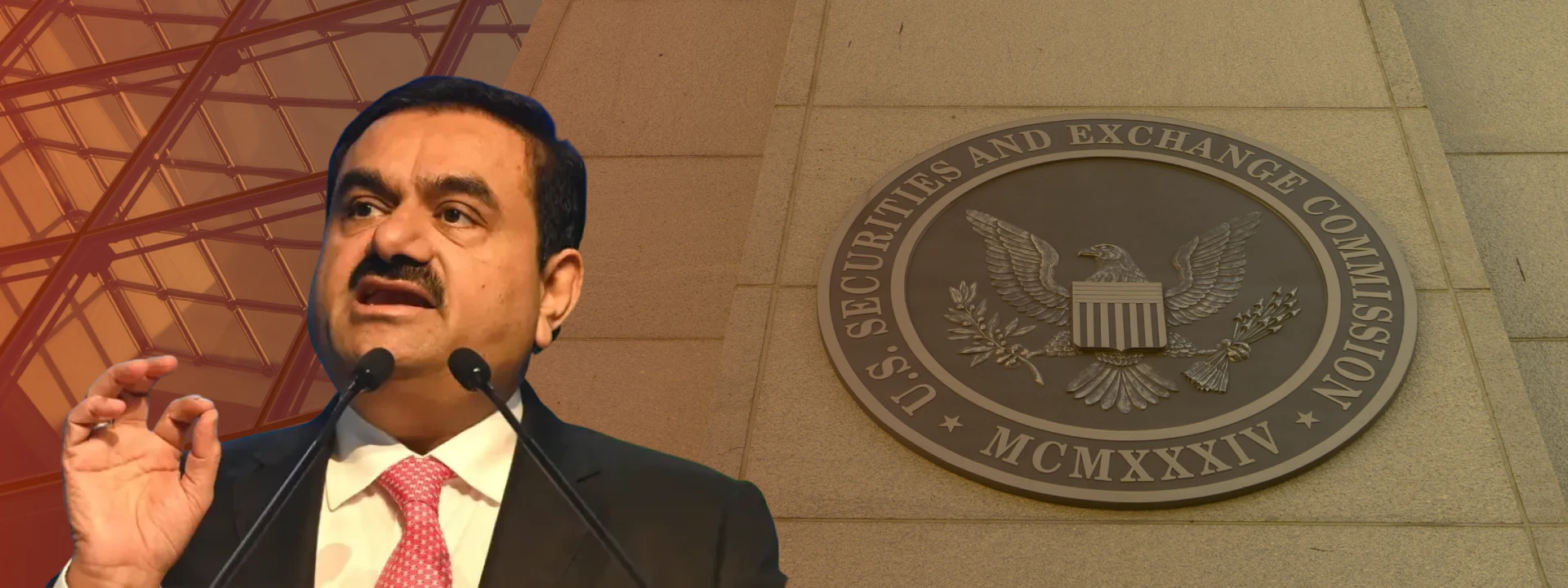
The US SEC Case Is A Global Conspiracy To Blackmail The Adani Group And India
A conspiracy theory that the U.S. Securities and Exchange Commission is going after Gautam Adani as part of a potent international conspiracy to blackmail the Adani Group or India has become widespread commentary and social media chatter. The language is hyperbolic but not judicial or regulatory, or a quote from the company.
In reality, it is a series of parallel civil and criminal actions pending in U.S. courts based on purported breaches of U.S. securities and anti-corruption statutes. They zero in on specific figures, on investor disclosures, and on alleged bribery involving energy contracts. What the case is – and what it is not – can only be understood by separating speculation from legal facts contained within the three dozen or so reported transcripts.
What The US Case Actually Is
The U.S. District Court for the Eastern District of New York has filed civil and criminal lawsuits against Gautam Adani, Sagar Adani, and other executives. These cases are being pursued through traditional Federal securities and anti-bribery laws (such as the FCPA).
The allegations revolve around accusations that executives participated in a plan to pay over $250 million in bribes to win solar energy contracts and that they then misled US investors about anti-corruption measures during a 2021 bond offering. However, the SEC’s civil complaint is limited in scope to disclosures to investors and violations of the securities laws.
These are enforcement proceedings based on United States law. Those aren’t diplomatic moves, trade sanctions or geopolitical steps aimed at India as a nation.

Who Is Named – And Who Is Not
A longstanding myth about this case is that it is against the Adani Group in general or the Government of India. The actual filings indicate otherwise.
The current charges and proceedings include:
- Gautam and Sagar Adani and some other current or former executives
- Supposed behaviour related to various solar contracts and investor disclosures
- U.S.-linked bond issuance for 2021
The filings do not include:
- Any immoral or illegal charge against the Adani Group as a corporation
- Any lawsuit against the Government of India
- Any allegation that India, as a country, is a party to the proceedings
This distinction is central. It is a fact-based case focused on people and transactions, not on a nation, its policy, or its larger economic system.
The Adani Group’s Official Position
The Adani Group has denied the accusations. The company, in its public responses, has referred to the charges as “meritless” and announced plans to “exercise all rights at its disposal to protect itself against such action.”
Simultaneously, no official statements by the company have framed the case in geopolitical or blackmail terms. The terms have remained in the realm of legal defence rather than political indictment. Controversially, it reflects the procedural nature of the case, which will be subject to court proceedings and evidentiary standards.
By keeping its response limited to legal, rather than rhetorical, ground, the company has indicated that it sees this as an issue to be worked out through the normal legal channels.
Why The ‘Global Conspiracy’ Narrative Doesn’t Align With The Record
Diplomatic messages, court filings, and statements from regulators have not supported claims that the case involved a Chinese global conspiracy or blackmail scheme.
Available documentation shows:
- We are also republishing the release that the U.S. SEC and Department of Justice are currently pursuing under current securities and antiquated bribery laws.
- The allegations involve disclosures to investors and alleged bribery linked to commercial contracts.
- And the legal basis is U.S. capital markets jurisdiction and investor protection.
- The filing does not characterise the action as targeting India’s government or economy.
- Neither government leaves the case brushed off in any diplomatic statement.
Such types of enforcement actions are common across global financial systems. Companies or executives accessing international capital markets become subject to disclosure and compliance requirements across several jurisdictions.
Procedural Developments And Delays
The case has also faced procedural complications regarding legal summons. Initially, U.S. authorities had sought to serve him with a summons through formal diplomatic channels. The Indian government declined requests on procedural grounds, delaying these efforts.
The SEC then asked the court for permission to serve the summons by other means, such as through the defendants’ lawyers and by email. These are the kinds of steps that are typically used in cross-border cases where normal diplomatic channels may be slow or irrelevant.
The nature of this recent procedural history illustrates the jurisdictional and logistical hurdles common in international legal disputes. They carry no sense of political escalation or an underground application of pressure methods.
Understanding The Legal Basis
This case relies on precedents in cross-jurisdictional legal frameworks used to police international capital markets and to combat corruption.
- The FCPA also permits U.S. authorities to prosecute bribery-related allegations against entities that access the U.S. financial markets.
- It is extremely important for investors because U.S. securities laws only allow the online casino brands to provide accurate disclosures to investors (to both accredited and non-accredited investors) if they are offering a bond or equity offering.
Foreign executives are not immune from U.S. enforcement action if they are involved in a transaction that has a nexus to U.S. investors or the U.S. markets.
The Difference Between Legal Action And Geopolitics
This Framework illustrates the international character of capital markets. Where investors are located, companies raising funds across borders must meet local disclosure and anti-corruption standards.
Given the numerous cross-jurisdictional aspects of the case, high-profile corporate cases like these are often viewed through a political lens. A legal enforcement action, however, is a very different beast from a geopolitical strategy.
While legal cases have statutes, evidence, and judicial procedure that drive them, they move through the process of being indicted, hearings, and possibly trials. Results turn on evidence and the practice of law, not diplomacy.
In contrast, actions in the geopolitical realm are usually sanctions, trade actions, and/or official diplomatic pressure. There is none of these in the current proceedings. The case lacks the government-to-government confrontation or the threat of economic sanctions that we have come to expect, emphasising the legal dimension of this affair over the geopolitical one.
Why Clarity Matters
Large multinational companies increasingly operate across borders and raise capital in global markets. This exposes them to multiple regulatory frameworks and enforcement regimes. Cases that arise from such exposure are often complex, involving overlapping jurisdictions and legal standards.
In such situations, separating documented legal developments from speculative narratives becomes essential. Mischaracterising enforcement actions as geopolitical conspiracies can obscure the actual issues being examined in court and complicate public understanding of cross-border regulatory systems.
A clear reading of the filings and official statements indicates that the current proceedings are grounded in legal claims concerning investor disclosure and anti-corruption compliance. Whether those claims are ultimately upheld or dismissed will be determined through the judicial process.
Legal Process, Not Political Theatre
The alleged case between U.S. regulators and some Adani executives is a judicial process unfolding within formal legal mechanisms. The emphasis is on allegations of discrete securities violations and alleged bribery, not on a broader geopolitical conflict.
Nowhere in court filings, statements from regulators or responses from the company did authorities state blackmail or conspiracy, indicating just how procedural the matter is. It is a classic war story exemplifying the inner workings of the global capital market.
But rhetoric may play a smaller role in the coming months as hearings and legal arguments unfold. This high-stakes drama will soon involve evidence – and a court. Recognising this line between what can be legally enforced and what can be politically narrated helps put the case in its realistic context.