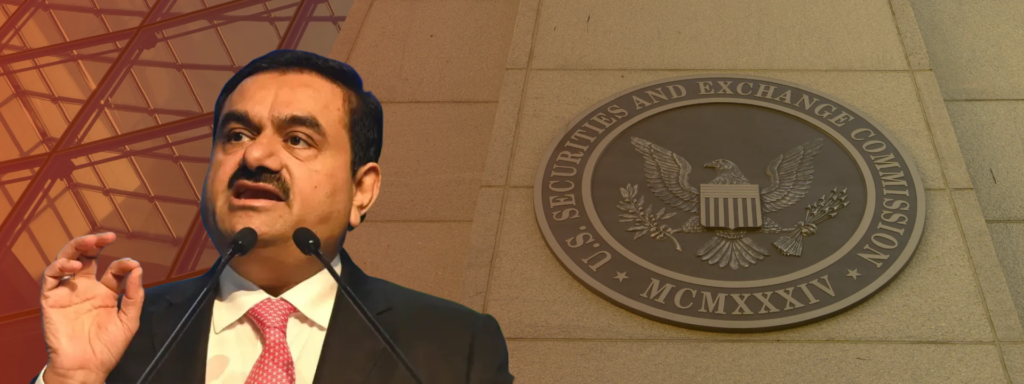

Decoding the Jaypee acquisition process: Why Did a ₹2,000 Crore Lower Bid Win?
In 2011, India got its first taste of Formula 1. The Buddh International Circuit roared to life, and for three consecutive years, the world’s best drivers raced on Indian soil. It was the kind of momentum that made Indian kids dream of being in those racer seats one day. Everyone expected grander events in the future. However, it never saw the fourth year.
The company that built India’s only F1 homologated circuit ran out of road long before the cars did. Jaypee Group, once one of India’s most ambitious infrastructure conglomerates, quietly collapsed under the weight of its own working model and formally entered insolvency in June 2024.
After lengthy legal proceedings, their assets have found a new owner, and the case caught the public imagination because the outcome surprised many. The winning bid was not the highest one on the table. The judgement went in favour of a ₹2,000 crore lower offer. While the decision might sound confusing on the surface, it is not unfamiliar to those who have followed the National Company Law Tribunal’s (NCLT) past proceedings closely.
To understand why, the numbers alone are not enough. What matters is the framework that is used to evaluate such cases, and in insolvency, that framework changes everything.
What the Bidding Process Actually Looked Like
JAL began selling assets in 2014 to sustain its borrow-build-monetise framework, which was already under strain. When it still couldn’t keep up, the Allahabad bench of the NCLT formally admitted JAL into insolvency on June 3, 2024.
Adani, Vedanta, Dalmia Cement, Jindal Power and PNC Infratech had shown interest in acquiring the debt-laden JAL at the subsidiary level. The floor price was fixed at ₹12,000 crore.
By the final stage, only Adani and Vedanta remained. However, the two bids differed not just in size, but also in structure:
- Vedanta offered a higher total value, but with a smaller upfront payment and a longer payout timeline.
- Adani proposed a lower total amount, but with a significantly higher upfront payment and faster execution.
In net present value terms, the difference between the two bids narrowed considerably, reflecting the time value of money.
Why Upfront Cash and Timing Matter
Upfront cash and timing matter considerably in reducing execution risk, especially when the practical NPV difference between the two bids was only ₹505 crore.


The Role of the Committee of Creditors
Under the IBC framework, the CoC governs the voting process and judicial bodies rarely override its decisions.
- Around 89% of creditors voted in favour of Adani’s plan
- The decision reflected a preference for faster and more certain recovery
- The voting process is governed by the Committee of Creditors under the IBC framework
- In this case, voting power was concentrated due to prior restructuring of debt holdings
The National Asset Reconstruction Company Limited (NARCL) was an important part of the entire process. Along with taking over a substantial portion of Jaypee’s stressed loans, the NARCL also acquired the corresponding voting rights in the creditor committee. That was one of the key decision factors impacting the outcome of the deal.
What Adani Is Acquiring
What JAL owned, maps directly onto Adani’s existing operations. The group already builds and operates large-scale logistics assets nationwide. Managing cement capacity is not new territory either; it is a natural extension of what Ambuja Cements is already executing at scale.
- Cement Capacity
Around 6.5 million tonnes per annum, strengthening its position in northern and central India - Land and Real Estate Assets
Large land parcels in Delhi-NCR, including Jaypee Greens and projects near the upcoming Noida International Airport - Hospitality Portfolio
Hotels and resort assets across key locations - Infrastructure Linkages
Exposure to assets connected to the Yamuna Expressway and related developments
A major post-acquisition restructuring is in process, according to sources. The strategy involves distributing JAL’s diverse assets across Adani’s core business verticals to unlock value and streamline operations. Key parts of the anticipated redistribution include:
- Power Assets: Expected to be transferred to Adani Power at a pre-agreed enterprise value, in line with the group’s policy of consolidating generation assets under one platform.
- Real Estate and Hospitality: The hospitality infrastructure (hotel properties) and the Delhi-NCR land bank are destined for Adani Realty, the promoter-family-owned real estate arm of the group.

What the Outcome Reflects
The Jaypee resolution is a vivid demonstration of how insolvency outcomes are negotiated under the IBC framework. This process is more about maximising recoverable value in practical terms than about the highest nominal bid.
The auction process in insolvency is different from a regular auction. Lenders don’t care about the highest number. They care about how quickly they can realise their money.
Adani’s proposal stood out because it was judged to be more reliable in practice. Its experience in the sector gave lenders confidence that the project would be diligently completed. The CoC evaluated all plans on overall merit — faster recovery, payment certainty, feasibility, workforce compensation, and homebuyer treatment, all factored in.
This produces a system in which the winning bid is not the highest but the one that offers the most credible pathway to recovery within a given time frame.